Proposed Project
Quick Project Overview
Heidelberg Materials Canada Limited has submitted an application to the Town of Cochrane for a Development Permit for a discretionary use under the Town’s Land Use Bylaw. The application proposes the construction and operation of a ready-mix concrete (concrete batch) plant within the existing Cochrane Aggregate Pit, located at 900 River Heights Drive.
According to the application materials, the proposed facility would be a portable dry-batch plant, meaning concrete would be produced on demand by loading dry materials into mixer trucks, with mixing occurring inside the trucks as they travel to construction sites. The proposal includes the installation of two concrete material silos, each approximately 60 feet (about 18 metres) in height, which the application indicates would be visible from surrounding areas.
The applicant states that the purpose of the project is to supply concrete locally for residential and commercial development in Cochrane, with the stated goal of reducing the need to transport concrete from Calgary. The application further indicates that the plant is intended to operate for the remaining life of the aggregate pit, which is currently projected to extend to approximately 2036. According to the submission, the plant would be removed as part of site reclamation at the end of pit operations.
Where the Plant Would Be Located
The proposed concrete batch plant would be located within the existing Cochrane Aggregate Pit at 900 River Heights Drive, in the general area shown in the image to the right. According to the application materials, the plant would be situated in a portion of the pit where gravel extraction has already occurred, and no expansion beyond the existing industrial footprint is proposed.
The applicant states that the proposed plant would be located approximately 300 metres from the Bow River. The application further indicates that, because the Gleneagles neighbourhood is situated at a higher elevation across the river, the facility may be visible from some nearby homes. Site access for vehicles is proposed via James Walker Trail and internal haul roads within the aggregate pit.
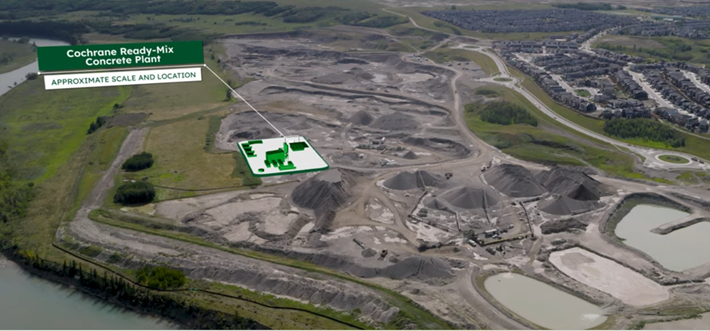
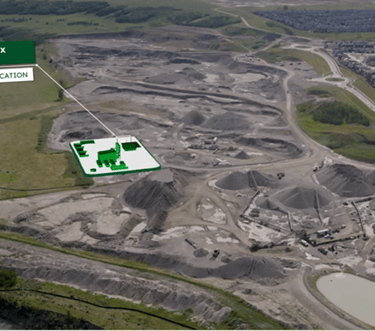
The location of a concrete batch plant can influence how it is experienced by surrounding areas. In this case, the proposed site is within the Bow River valley and in proximity to residential neighbourhoods, recreational pathways, and a recognized natural corridor. In open river valley environments, activities such as truck traffic, material handling, lighting, and noise may be perceived over greater distances, particularly where elevation differences exist between industrial sites and nearby homes.
The Bow River corridor is an area where the Town of Cochrane has identified objectives related to environmental stewardship, recreation, and long-term community use through various planning and policy initiatives. As a result, decisions regarding industrial activity in this setting involve consideration of land use compatibility, cumulative effects, and long-term planning objectives, particularly as surrounding areas continue to develop.
Understanding the proposed location helps residents and decision-makers consider not only what is being proposed, but how and where it may operate, and how its setting could influence surrounding communities and the character of the area over time.
What Would Be Built On-Site
To support operation of the proposed batch plant, the applicant proposes the installation of additional conveyors and material-handling infrastructure that would integrate with existing gravel extraction and processing activities within the Cochrane Aggregate Pit.
According to the application, new conveyor belts would be installed to transport sand and gravel from existing stockpiles and processing areas to the batch plant.
The proposed conveyors would connect the batch plant to existing aggregate crushing and screening operations already operating within the pit.
The application does not propose the installation of a new rock crusher. Concrete production would rely on aggregate processed through the existing crushing equipment on site.
Conveyor systems are proposed to operate during batching activities and would form part of routine material movement within the pit during plant operation.
The proposed equipment would add to the range of material-handling infrastructure present on site, including conveyors, loaders, and internal truck movements associated with batch plant operations.
How the Batch Plant Would Operate (Plain Language)
Concrete production involves multiple materials and operational steps, including the handling of fine powdered materials, chemical additives, and the use of water. The application includes technical studies intended to demonstrate compliance with applicable air quality and water management requirements. As with any industrial operation, system performance over time depends on operating practices, monitoring, and regulatory oversight.
According to the application, aggregate, cement, and additives such as fly ash and liquid admixtures would be loaded into mixer trucks. Fly ash is a fine powdered material, which is why dust control and filtration systems are proposed as part of the facility design.
Water would be added and concrete mixed inside the rotating truck drum. The application also indicates that water would be used for purposes such as truck washing, dust suppression, and winter operations.
Because ready-mix concrete must generally be delivered and placed within a limited time after mixing, production is proposed to occur on demand. This operational model can result in periods of concentrated activity.
Concrete production requires substantial water use, and the application proposes sourcing water through a combination of recycled process water, municipal supply, and provincially licensed surface water withdrawals. As a result, water availability and management form part of the operational considerations for the facility.
Day-to-day operations are expected to vary based on factors such as construction schedules, weather conditions, and market demand, which may influence the timing and intensity of truck movements and on-site activity.
Proposed Hours of Operation
The hours during which a concrete batch plant operates are an important consideration for nearby residents, particularly with respect to noise, traffic, lighting, and activity during early morning or evening periods. The application describes both “typical” and “maximum” operating hours for the proposed facility.
Community members have noted that, based on their experience with existing aggregate operations in the area, activity may occur toward the upper end of permitted operating hours, particularly during peak construction periods. Understanding how permitted hours are applied in practice is therefore relevant when considering proposed operating conditions.
Extended or variable operating hours can influence factors such as sleep, traffic patterns, use of outdoor spaces, and overall quality of life, particularly when operations occur early in the morning, later in the evening, or on weekends and holidays. Reviewing both the hours described in the application and how similar operations have functioned under permitted conditions helps residents and decision-makers assess whether proposed limitations are appropriate for the surrounding area.
The application identifies maximum permissible operating hours that include evenings, Sundays, and statutory holidays, as well as shorter hours described as “typical.”
Residents have indicated that existing aggregate operations have, at times, operated toward the upper end of permitted hours, including Sundays and statutory holidays. This experience has informed community interest in how batch plant operations might be managed if approved.
The application indicates that concrete production is proposed to operate on an on-demand basis, meaning activity levels would be influenced by construction schedules and weather conditions rather than fixed daily routines.
Because ready-mix concrete generally must be delivered and placed within a limited time after mixing, production may occur in concentrated periods, which can result in irregular or extended operating windows.
The application materials indicate that aggregate and batch plant operations are not subject to a dedicated municipal noise bylaw governing hours of operation, making permit conditions an important tool for managing when activity may occur.
Truck Traffic and Transportation
The traffic estimates included in the application are based on a Transportation Impact Assessment provided by the applicant. The study provides estimates of expected average daily truck activity associated with the proposed batch plant. Community members have raised questions about how these estimates account for peak construction periods, real-world operating conditions, and the combined traffic effects of both the proposed batch plant and the existing aggregate pit operations.
The Transportation Impact Assessment estimates an average of approximately 50–55 truck trips per day associated with the batch plant only, including both inbound and outbound vehicle movements. Traffic related to existing gravel pit operations is addressed separately and is not included in this total.
According to the study, these trips include concrete mixer trucks, cement bulkers, water trucks, and service vehicles. Traffic related to existing gravel pit operations is treated as background traffic and is not included in the batch plant trip total.
The traffic estimates are based on average daily activity and do not represent peak construction days, during which demand, operating hours, and vehicle turnover may differ from average conditions.
The application indicates that the aggregate pit material is predominantly sand, while ready-mix concrete production typically requires both sand and gravel in varying proportions. This has led community members to seek clarification on whether additional aggregate transportation to or from the site may be required over time.
The traffic study notes uncertainty related to future growth beyond the initial assessment horizon and identifies the need for monitoring and potential reassessment as conditions change.
From a community perspective, attention is focused on the combined traffic associated with existing aggregate operations and the proposed batch plant, particularly along James Walker Trail and other routes that overlap with pedestrian and cycling infrastructure.
Cement Handling, Dust, and Air Quality Controls
Cement handling and batching involve the transfer of fine powdered materials, making effective dust control an important consideration, particularly in windy conditions and in proximity to residential areas and the Bow River. The application describes a range of mechanical controls intended to reduce dust emissions. Community members have raised questions about how these systems perform under real-world operating conditions and how monitoring and enforcement would function over time.
Understanding how dust control measures are designed to operate, and how they may perform under site-specific conditions, is relevant when considering potential long-term implications near residential areas and environmentally sensitive locations.
According to the application, cement and fly ash would be delivered daily by bulk trucks and pneumatically transferred into silos, a process that involves handling very fine powdered materials.
The application indicates that individual silo-loading events typically last approximately 60–90 minutes, during which dust control systems are intended to operate continuously.
The proposal includes the use of dust collectors, baghouses, and filtration systems on silos and associated plant equipment to reduce particulate emissions.
Such systems are designed to reduce dust emissions but rely on proper operation, maintenance, and site conditions, including weather factors such as wind.
The application also proposes the use of water for dust management on roads and stockpiles. Community members have noted that the effectiveness of this approach depends on consistent and timely application.
Residents have indicated that they have raised concerns in the past regarding dust leaving the existing aggregate pit site, including communications with the applicant, the Town, and Alberta Environment and Protected Areas.
Community members report that dust concerns have persisted at times despite these communications, contributing to questions about how proposed dust control measures would be implemented and monitored if the batch plant were approved.
The application indicates that routine daily ambient air-quality monitoring is not proposed, with reliance placed on equipment-based controls and regulatory compliance. Community members have expressed interest in understanding how potential issues would be identified and addressed in the absence of continuous monitoring.
Water Use and Runoff Management - Operations and River Context
Concrete production requires access to water, making water sourcing and runoff management important considerations when industrial activity is proposed near a major river corridor. In this case, water use associated with the proposed batch plant intersects with municipal supply systems, provincially regulated water licensing, and broader considerations related to long-term water availability and runoff management.
According to the application, concrete production would require water for batching, mixer truck washing, dust suppression, and winter operations.
The application proposes sourcing water through a combination of municipal supply and provincially licensed surface water, meaning operations would rely on both local infrastructure and provincially managed water allocations.
The applicant proposes recycling process water through three on-site washout cells intended to capture and reuse water from batching and truck washing activities.
While water recycling can reduce the demand for fresh water, the application indicates that ongoing operations would continue to require regular freshwater inputs.
In addition to water use, runoff containment and site drainage management are important considerations given the site’s proximity to the Bow River. Community members have noted that in May 2024, water from a pond within the existing aggregate pit was released and flowed toward the river. While circumstances, approvals, and regulatory findings related to that event may differ, residents have pointed to this experience as underscoring the importance of clear safeguards, monitoring, and enforcement to ensure on-site water management systems function as intended over time.
Beyond site-level controls, the broader river system context is also relevant. The proposed operation would draw water from a river system that is subject to long-term allocation limits.
The Bow River forms part of the South Saskatchewan River Basin, which provincial planning documents have identified as fully allocated under certain flow conditions.
Application materials indicate that one of the water licences associated with the applicant’s operations is currently under appeal, which introduces uncertainty regarding future water availability.
During periods of low river flows, community members have expressed interest in understanding how industrial water use and runoff management would be addressed in relation to licence conditions, environmental flow needs, and broader community water use.
Consideration of water sources, licensing certainty, runoff controls, and low-flow operating conditions forms part of evaluating long-term industrial activity in proximity to the river.
Environmental Studies Submitted with the Application
The Development Permit application includes a number of environmental and technical studies related to the proposed batch plant. These studies assess potential effects associated with batch plant operations and were prepared by, or provided on behalf of, the applicant.
From a community perspective, questions have been raised about the scope of these studies, particularly whether they fully consider the combined and longer-term effects of concrete production operating alongside ongoing gravel extraction and processing at the site.
A Noise Impact Assessment was submitted that evaluates predicted noise levels associated with batch plant operations in relation to applicable municipal standards. The assessment focuses on batch plant activity and does not include cumulative noise from existing gravel extraction and processing.
An Air Quality Impact Assessment was provided that evaluates emissions associated with the batch plant under modeled operating conditions and proposed control measures, with results compared to provincial air quality thresholds.
A Visual Impact Assessment identifies moderate visual effects from certain residential viewpoints, with analysis focused on batch plant structures rather than the broader industrial activity occurring at the site.
A Transportation Impact Assessment evaluates traffic generated by the batch plant only, treating existing gravel pit traffic as background conditions.
An Environmental Management Plan outlines proposed mitigation and monitoring measures related to the operation of the batch plant.
Construction: Timeline and Reclamation
The application indicates that construction and commissioning of the proposed concrete batch plant would take approximately five to six months following the issuance of required permits. The applicant describes the facility as portable and states that it is intended to be removed at the end of aggregate extraction at the site, which is currently projected to occur around 2036. The application further indicates that, following the completion of pit operations, the site is expected to be reclaimed and redeveloped in accordance with applicable plans and approvals.
From a community perspective, questions have been raised regarding how the timing and implementation of plant removal would be addressed, and what mechanisms would be in place to ensure that batch plant operations do not continue beyond the life of the aggregate pit. Given the length of the proposed operating period and the site’s proximity to areas planned for future residential development, residents have expressed interest in greater clarity around how reclamation commitments would be secured, enforced, and monitored over time.
Key Questions Residents May Wish to Consider
The Development Permit application includes technical studies and proposed mitigation measures related to the concrete batch plant. Based on the information submitted, combined with community experience of existing operations and the site’s location within the Bow River corridor, the following questions may assist residents and decision-makers when considering whether the proposal is appropriate, enforceable, and compatible over the long term.
What enforceable permit conditions would apply to noise, dust, lighting, truck traffic, and operating hours, including early equipment start-up, evenings, Sundays, and statutory holidays?
How would compliance with permit conditions be monitored and enforced over time, particularly in the absence of routine ambient air-quality monitoring?
Would the batch plant be explicitly limited to operating only during the active life of the aggregate pit, and only using aggregate sourced from the site, with clearly defined conditions or triggers for removal?
What safeguards would apply if operations trend toward maximum permitted hours or higher production levels than those described as “typical” in the application?
How would cumulative effects be considered and managed, given that the submitted studies focus on batch plant operations and do not evaluate combined effects with ongoing gravel extraction?
How would water availability and licensing considerations be addressed during low-flow periods in the Bow River and the South Saskatchewan River Basin, particularly while water licence transfers remain under appeal?
What mechanisms would ensure that the plant is removed and the site reclaimed as described, and how would these commitments be secured and enforced over the life of the operation?
How does the proposal align with the Town’s emerging Bow River Strategy and related objectives for environmental stewardship, land-use compatibility, and long-term community use of the river corridor?
Information Notice
This website is intended to provide general information about a proposed development application based on publicly available information, application materials, and community input. Descriptions of the project reflect information submitted by the applicant at the time of writing and may change as the review process progresses.
Contact Us
stopcochraneconcreteplant@gmail.com
Subscribe for updates:
This website is maintained by concerned community members and is not affiliated with any government agency or the project applicant. Information is provided for general educational purposes.
© 2026 Concerned Citizens Cochrane. All rights reserved.